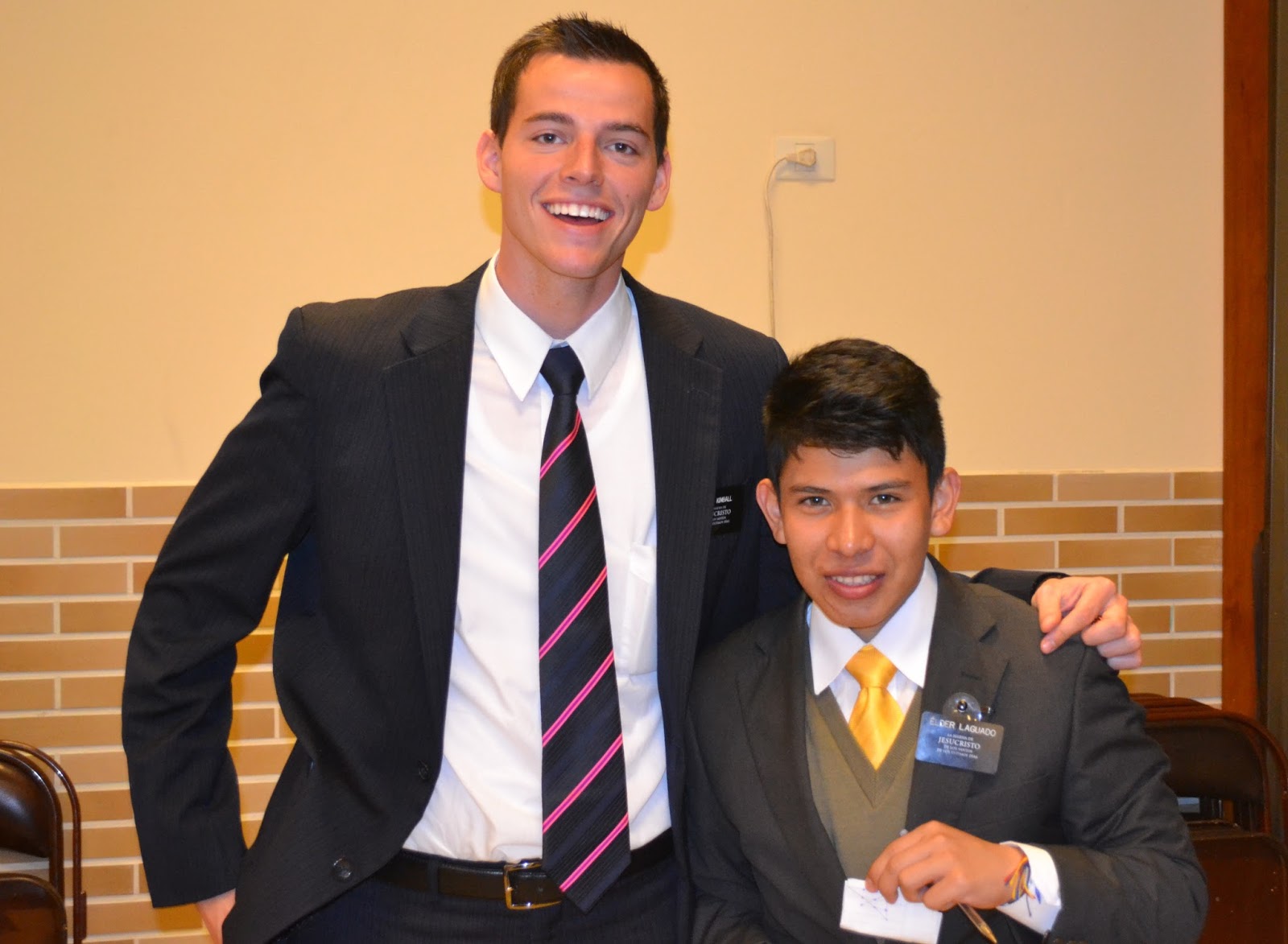
This is a great article from Lds.org about the growth of the
number of missionaries.
There are 2 video clips about missionary life that you can watch if you log onto the blog.
What an exciting time to be a missionary!
Mormon Missionary Numbers Reach 75,000 Milestone
Since
the October 2012 announcement that men can begin Mormon missionary service at
age 18 and women at 19, the ranks of Mormon missionaries have swelled. Prior to
the announcement, 58,500 missionaries were serving; as of this week, that
number is now 75,000.
The
following story and videos about the lives of Mormon missionaries provide
insights into what these missionaries do and why they do it.
Life
of a Mormon Missionary: Teaching Others About Christ
After the rains of Hurricane Sandy
stopped in late October 2012, Elder Jordan Walton, a missionary in the New York
New York South Mission of The Church of Jesus Christ of Latter-day Saints,
recalls driving with his companion, Elder Josh Munday, to affected areas such
as Broadchannel and Rockaway to see the incredible devastation.
“I
remember as [we] walked down those streets, [we saw] the look on these people’s
faces and they did not know what to do,” Elder Walton says. “We started helping
them. We started taking out their floorboards, we started taking out their
sheetrock, their dirty couches — all the things that they couldn’t use.”
Over
the next six weeks, the New York New York South Mission helped orchestrate over
120,000 hours of service from more than 11,000 volunteers. Although not all
Mormon missionaries around the world participate in such extensive community
service, the story is a reflection of the core purpose shared by each of the
Church’s 75,000 missionaries in 405 missions: to invite others to come unto
Christ through word and deed.
Following
the pattern Jesus Christ established in the New Testament, full-time Mormon
missionaries are sent out two by two (see Mark 6:7) to
teach the gospel through lessons and service for 18 to 24 months. Men can serve
at 18, women at 19; each funds his or her missionary service (an approximate
cost of $10,000 to $12,000), sometimes with the help of family and friends. As
Christ taught, these missionaries find greater purpose in their lives as they
focus on the needs of others — a process that New York New York South Mission
president Kevin Calderwood says “dramatically changes their hearts.”
A
Typical Day
Missionaries
are up by 6:30 every morning. They spend all day, every day with an assigned
companion (companion changes occur every couple of months). Each companionship
spends several hours every morning studying the teachings of Jesus Christ and
discussing that day’s planned teaching appointments. “We’re really thinking
about each of the people we’re going to see that day and how we can help them
come closer to the Savior,” Elder Walton says.
The
morning routine also includes language practice for those missionaries assigned
to speak a second language. In the New York New York South Mission, Sister
Kimberly Bradfield and her companion, Sister Shianne Allen, teach others in
Spanish. Like many missionaries learning a foreign language, they didn’t know
Spanish before their mission, creating a kind of baptism by fire in language
learning.
“Neither
of us knew Spanish prior to our mission, and so for nine weeks we studied
Spanish [at a missionary training center],” Sister Bradfield says.
After
the morning routine, missionaries meet with individuals in a wide variety of
settings until 9 p.m., with a short break in between for lunch and dinner.
Depending on location, they can travel by foot, bike, car, bus or other means.
They talk with people on the street and in their homes, discussing basic Mormon
beliefs and answering questions. And because many people prefer to connect
online, missionaries also use the Internet and digital devices in their
ministry.
Missionaries
visit those of other faiths and Church members in need of an uplifting message.
Sister Bradfield says missionaries don’t force their beliefs on others; rather,
“[We] invite them to come unto Christ — not to change the faith they have, but
to strengthen that faith.” Elder Munday adds, “[We’re] here to strengthen and
give a little bit of hope to people. Our ultimate message to the world is that
through the Savior Jesus Christ you can overcome trials.”
Missionaries
provide community service such as disaster cleanup (like the aforementioned
Hurricane Sandy effort), teaching English and visiting the elderly. “We help
anybody and everybody,” Sister Allen says. After Hurricane Sandy, Mormon
missionaries made an effort to not only help fellow Mormons but also, Sister
Allen says, “to help their neighbors and to help anybody within their area.”
The collective number of yearly service hours given by these 75,000 young men
and women is in the millions.
Missionaries
also take a few hours one day a week for personal tasks, such as laundry,
cleaning, grocery shopping and writing to family via email.
Finding Themselves by
Serving Others
Elder
Munday says the beginning of his mission was perhaps the most difficult time of
his life. He found himself far away from his home in England, struggling with
homesickness. The turning point came when he began to look outside himself.
“That’s when I was able to feel comfortable here, when I stopped caring about
myself and start caring about others,” he says. “It helped me to grow so much.”
Focusing
more on others is not easy for anybody, especially teenagers and young adults.
“That’s usually a period of our lives when we’re quite self-absorbed,”
President Calderwood says. “These missionaries give up all of that.”
This
results in missionaries becoming more concerned about what’s happening to their
fellow man than they are about themselves. Such service builds a “good
foundation for their lives to become good spouses, good fathers, good mothers
and very good in their communities,” President Calderwood says.
“It’s
just one of the most rewarding things you can do,” Sister Bradfield says of
missionary service. “True happiness is really in helping the people around
you.”